
 EN
EN


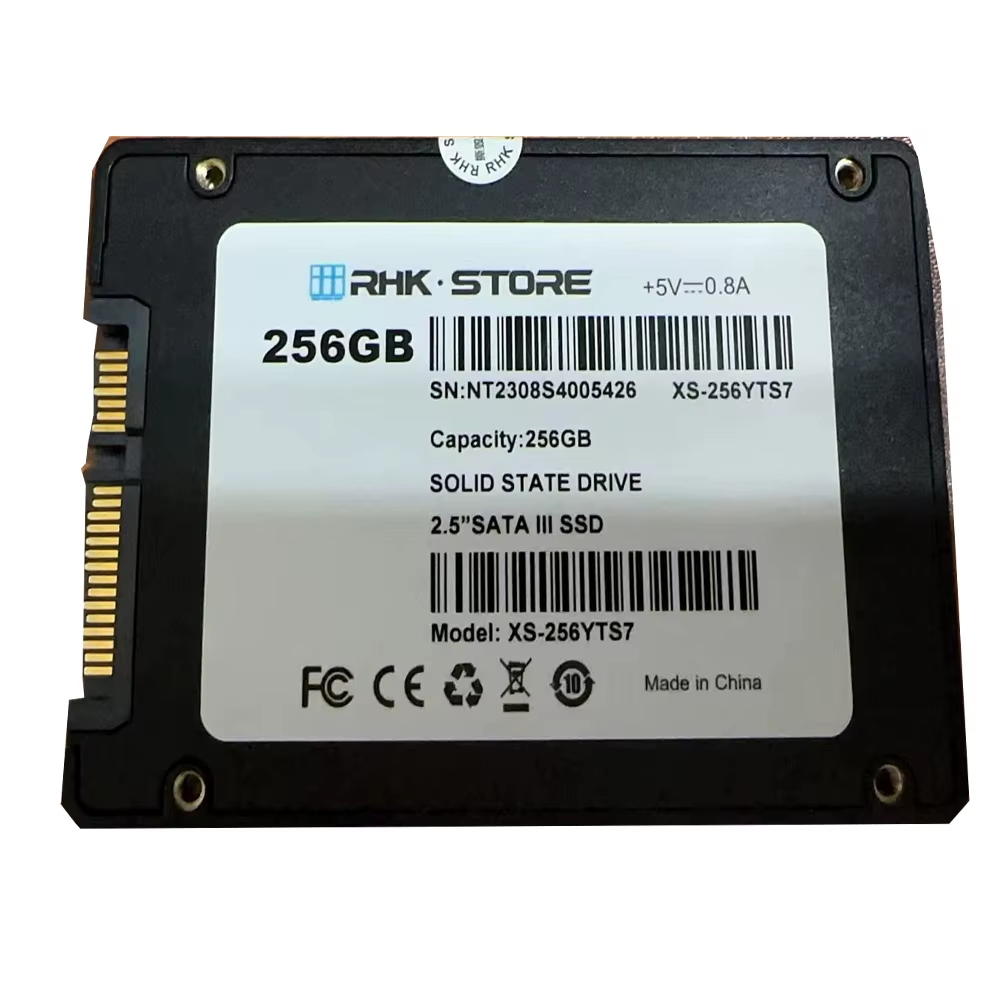
Key SSD Reliability Metrics That Predict Long-Term Performance
TBW, DWPD, and P/E Cycles: Translating Specs into Real-World Endurance
The long-term reliability of an SSD is defined not by time alone, but by quantifiable endurance metrics that reflect how much writing the drive can sustain before NAND wear becomes critical. Terabytes Written (TBW) represents the total amount of data that can be written over the drive’s warranty period—often hundreds or thousands of terabytes for enterprise models. Drive Writes Per Day (DWPD) translates TBW into a daily workload context: it indicates how many full drive-capacity writes the SSD can handle each day for its warranty duration. For example, a 1.92TB enterprise SSD rated at 3,504 TBW supports 5 DWPD over five years.
Underpinning both TBW and DWPD is the Program/Erase (P/E) cycle limit—the finite number of times each NAND cell can be written to and erased. This physical constraint governs all endurance ratings. While age-related failure does increase slightly over time, research from Google and the University of Toronto found SSDs still required replacement 25% less often than HDDs, reinforcing that endurance—not calendar life—is the dominant factor in real-world longevity.
Why MTBF Is Inadequate for SSD Lifespan — And What to Track Instead
Mean Time Between Failures (MTBF) is a misleading metric for SSD evaluation. Designed for repairable electromechanical systems, MTBF estimates average failure intervals across large populations using small-sample extrapolations—not individual drive lifespan. A reported figure like “2.5 million hours” offers no actionable insight into write exhaustion or cell degradation. Because SSD failures stem primarily from predictable NAND wear and write amplification—not random component failure—MTBF fails to model actual failure mechanisms.
Instead, prioritize metrics tied directly to NAND consumption: real-time monitoring of % TBW consumed, media error rates, and early signs of P/E cycle exhaustion provide far more accurate health signals. Leading vendors embed these telemetry points into management interfaces, enabling proactive replacement before performance collapse or data loss occurs.
NAND Flash Type and SSD Brand Consistency: The Foundation of Durability
SLC to QLC: How Cell Architecture Dictates Long-Term SSD Reliability
NAND flash architecture fundamentally shapes endurance and long-term stability. Single-level cell (SLC) stores one bit per cell and endures up to 100,000 P/E cycles; multi-level cell (MLC), with two bits, typically achieves 3,000–10,000 cycles. Triple-level cell (TLC) and quad-level cell (QLC) pack three and four bits per cell, respectively—reducing endurance to roughly 1,000–3,000 and 100–1,000 P/E cycles (Industry NAND Reliability Guidelines, 2023). These lower limits translate directly into reduced TBW and DWPD ratings.
Higher bit density also increases write amplification, accelerates wear under sustained workloads, and degrades sustained write speeds. Though modern controllers mitigate some QLC limitations with advanced error correction and over-provisioning, the underlying physics remain unchanged: SLC and MLC offer inherently higher durability ceilings. For applications demanding multi-year reliability under heavy writes, NAND type sets the foundational boundary for longevity.
Top SSD Brands’ NAND Sourcing & Manufacturing Control Strategies
Long-term reliability hinges as much on supply chain discipline as NAND architecture. Vertically integrated manufacturers—those designing, fabricating, and assembling their own NAND—maintain tight control over process variation, defect screening, and firmware co-optimization. Their rigorous binning ensures only NAND wafers meeting strict P/E uniformity thresholds enter final assembly, minimizing inter-batch performance drift.
In contrast, brands sourcing NAND from multiple third-party suppliers face greater variability in raw material quality and endurance consistency—risking unpredictable aging behavior across production runs. Top-tier vendors further reinforce durability through proprietary validation: extended burn-in, temperature-cycled stress testing, and workload-specific aging simulations designed to expose infant mortality and latent wear issues. This end-to-end manufacturing rigor—combined with in-house NAND expertise—is what separates drives built for five-year deployments from those optimized solely for initial cost.
Enterprise vs. Consumer SSDs: Validated Workload Resilience Over Time
Real-World Edge and Data Center Deployments: Where Long-Term SSD Reliability Is Tested
Enterprise SSDs earn their reputation for long-term reliability not in labs alone—but under relentless, real-world conditions: 24/7 operation in edge servers and hyperscale data centers where consumer drives rapidly falter. Consumer models lack power-loss protection, use minimal over-provisioning, and throttle aggressively under sustained writes—making them vulnerable to data corruption during unexpected outages.
Enterprise SSDs counter this with purpose-built resilience: high DWPD/TBW ratings (e.g., >8,000 TBW for a 1.6TB model), up to 37% over-provisioning, hardware-based power-loss protection, and end-to-end data path integrity. They’re validated across extreme thermal ranges (–40°C to 85°C) and subjected to JEDEC-compliant endurance testing—including years’ worth of simulated AI training, financial transaction, and cloud storage I/O patterns. These programs ensure consistent performance and data fidelity across multi-year deployments, backing 5+ year warranties with empirical validation—not just theoretical specs.
Firmware, Validation Rigor, and Batch Consistency Across Leading SSD Brands
How Firmware Updates, Certification Programs, and QA Protocols Shape Multi-Year SSD Stability
Firmware is the operational intelligence behind SSD endurance. It governs wear leveling, garbage collection efficiency, read/write balancing, and real-time error recovery. Leading vendors deliver regular, field-tested firmware updates that refine these functions—extending usable life, reducing uncorrectable errors, and adapting to evolving workload profiles. Without such updates, even well-engineered hardware can degrade prematurely due to suboptimal data management.
Validation rigor provides the foundation for trust. Reputable brands certify enterprise SSDs against JEDEC standards like JESD218A (endurance testing) and JESD219 (workload profiling), ensuring drives meet stringent requirements for sustained write loads and data integrity over years of continuous operation. While consumer SSDs may not carry formal JEDEC certification, top-tier manufacturers often apply equivalent internal test methodologies across product lines.
Finally, batch consistency reflects disciplined quality assurance. Accelerated life testing, component-level screening, and statistical process control prevent unit-to-unit variability that could cause premature failure in one drive while another exceeds expectations. When combined—proactive firmware evolution, standardized validation, and rigorous QA—these practices deliver the predictable, multi-year stability essential for infrastructure-grade storage.
FAQ
What are TBW and DWPD in SSD specifications?
TBW (Terabytes Written) measures the total amount of data an SSD can handle over its warranty period, while DWPD (Drive Writes Per Day) calculates how many full drive-capacity writes the SSD supports daily for its warranty duration.
How does NAND architecture affect SSD reliability?
NAND flash types like SLC, MLC, TLC, and QLC have different endurance levels based on their cell structure. SLC offers the highest P/E cycles, while QLC has the lowest, impacting long-term reliability directly.
Why is MTBF considered inadequate for estimating SSD lifespan?
MTBF doesn’t measure NAND wear or write amplification—the primary causes of SSD failure. Metrics like % TBW consumed and P/E cycle exhaustion are more accurate indicators of SSD health.
Why are enterprise SSDs more reliable than consumer models?
Enterprise SSDs feature higher DWPD/TBW ratings, power-loss protection, over-provisioning, and rigorous validation to ensure durability under sustained workloads and extreme conditions.
How important are firmware updates in determining SSD lifespan?
Firmware updates optimize wear leveling, error recovery, and workload adaptation, significantly extending SSD usable life and minimizing failure risks.