
 EN
EN



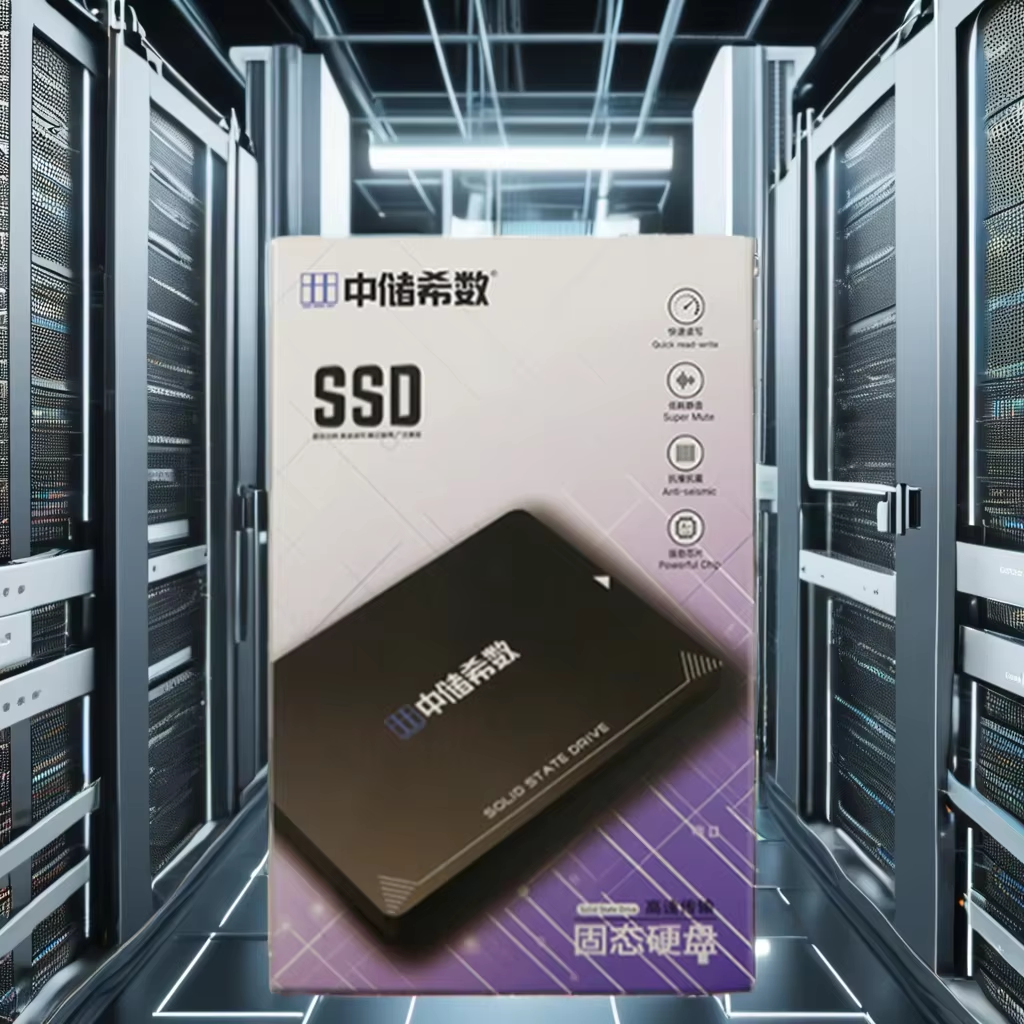
Rugged Physical Design: Shock, Vibration, and Temperature Resilience
Shock and Vibration Tolerance in Harsh Mechanical Environments
Industrial SSDs operate reliably amid the intense mechanical stress of manufacturing plants, transportation equipment, and heavy machinery—where continuous vibration and sudden shocks are routine. To prevent solder joint fatigue, PCB flexing, and connector failure, industrial drives use reinforced construction: thicker PCBs, cableless interfaces (e.g., direct-soldered NVMe or SATA), and shock-absorbing mounting hardware. Devices certified to MIL-STD-810G withstand shocks up to 50G and vibrations exceeding 5GRMs—specifications validated through third-party lab testing. This level of resilience directly reduces unplanned downtime by preventing data loss or drive failure during mechanical transients.
Extended Temperature Range Operation: -40°C to +85°C Stability
Unlike consumer SSDs rated for 0°C to 70°C, industrial-grade models maintain full functionality across -40°C to +85°C—enabling deployment in uncontrolled environments like outdoor kiosks, refrigerated logistics hubs, or furnace-adjacent control cabinets. This capability stems from component-level hardening: controllers with extended-temperature qualification, wide-temperature NAND flash, and thermal management firmware that avoids aggressive throttling while preserving write performance. Real-world validation includes thermal cycling tests per JEDEC JESD22-A104 (1,000+ cycles between extremes), ensuring long-term reliability without calibration drift or latent bit errors.
Power-Loss Protection and Industrial-Grade Data Integrity
Capacitor-Based PLP vs. Firmware-Driven Recovery for Critical Writes
Power-loss protection (PLP) is non-negotiable in industrial automation, where even millisecond outages can corrupt critical operational data. A dual-layer approach delivers comprehensive coverage: capacitor-based PLP uses high-reliability tantalum polymer capacitors to supply emergency power—typically 2–10 ms—just long enough to flush the write cache to NAND. This hardware layer operates independently of host coordination, making it effective even during abrupt blackouts.
Firmware-driven PLP complements this by managing logical-to-physical mapping table integrity, suspending new writes on voltage drop detection, and initiating a controlled shutdown sequence. Integrated voltage monitoring circuits respond within microseconds when input power falls below safe thresholds—enabling sub-millisecond activation of both hardware and firmware safeguards.
| Protection Layer | Primary Function | Industrial Application Benefit |
|---|---|---|
| Capacitor-Based PLP | Emergency power delivery for active writes | Prevents data loss in mid-transaction |
| Firmware PLP | Mapping table integrity & write suspension | Ensures file system consistency recovery |
| Voltage Detection | Real-time power monitoring | Enables sub-millisecond response times |
This architecture meets the zero-tolerance requirements of SCADA, robotic motion controllers, and PLC loggers—where unsaved state changes could trigger production halts or safety violations. Advanced LDPC ECC (Low-Density Parity Check), implemented at the controller level, further corrects bit errors induced by power instability or NAND wear, extending usable lifespan under harsh conditions.
Endurance Engineering: NAND Type Selection and Real-World Write Endurance
Industrial SSD endurance must align with application-specific write profiles—not just theoretical specs. NAND cell architecture (SLC, pSLC, or TLC) fundamentally determines P/E cycle count, retention, and real-world TBW (Total Bytes Written). In automated systems generating sustained write loads—such as real-time sensor logging or video analytics at the edge—DWPD (Drive Writes Per Day) over five years is the most actionable metric for predicting replacement intervals and total cost of ownership.
SLC, pSLC, and TLC SSDs Compared: TBW, DWPD, and Cost per GB in Automation Systems
Balancing longevity, performance, and budget requires precise NAND selection:
| NAND Type | TBW Range (Industrial) | DWPD (5-year) | Cost per GB | Ideal Use Case |
|---|---|---|---|---|
| SLC | 30,000–100,000+ | 10–35+ | Highest | Mission-critical logging |
| pSLC | 10,000–20,000 | 3–10 | Moderate | Edge data aggregation |
| TLC | 1,500–5,000 | 0.5–3 | Lowest | Read-heavy HMI systems |
Source: Industrial Flash Storage Report 2023
SLC’s single-bit-per-cell design delivers >100,000 P/E cycles and superior read/write consistency—ideal for applications where data fidelity outweighs cost. pSLC leverages TLC silicon but restricts each cell to one bit via firmware and over-provisioning, achieving ~3× the endurance of native TLC at roughly half the $/GB premium. TLC remains viable only where writes are infrequent and predictable—such as static HMI assets or configuration storage. Field data from Tier 1 automation OEMs shows TLC drives deployed in 24/7 PLC logging roles often reach end-of-life before 18 months, whereas SLC variants routinely exceed 5-year service life with <0.1% uncorrectable error rates.
Smart tiering—using SLC for high-write operational logs and TLC for archival—optimizes both durability and cost without compromising system integrity.
Industrial SSD Integration: Interface, Form Factor, and Firmware Reliability
Selecting an industrial SSD demands alignment across three interdependent dimensions: interface bandwidth, physical integration constraints, and firmware intelligence. For latency-sensitive applications like motion control or high-frequency data acquisition, NVMe over PCIe Gen4 delivers up to 10,000 MB/s sequential throughput and sub-100μs I/O latency—critical when microsecond timing affects process repeatability. SATA III remains a pragmatic choice where compatibility, thermal headroom, and cost efficiency matter more than peak speed.
Form factor selection follows mechanical and thermal realities: M.2 and BGA modules suit space-constrained embedded controllers; 2.5-inch U.2 drives support hot-swap redundancy in rack-mounted edge servers; and ruggedized mSATA variants endure high-vibration rail or marine deployments. Crucially, firmware must go beyond generic drivers—it should include field-proven features like adaptive wear leveling, dynamic bad-block remapping, and vendor-validated power-loss recovery sequences. Leading industrial SSD vendors provide firmware customization services, enabling integrators to tune queue depth behavior, adjust thermal throttling curves, or lock firmware versions for regulatory compliance—ensuring stable, repeatable performance across thousands of deployed units.
This holistic integration—matching interface, form factor, and firmware to the operational envelope—directly governs system uptime, maintenance frequency, and long-term TCO in mission-critical infrastructure.
FAQs
What makes industrial SSDs different from consumer SSDs?
Industrial SSDs are designed for extreme conditions, featuring shock resistance, expanded temperature ranges (-40°C to +85°C), and advanced power-loss protection mechanisms. They use high-quality components and firmware for reliability in demanding environments.
Why is power-loss protection (PLP) crucial for industrial SSDs?
PLP ensures data integrity and prevents data loss during sudden power outages by using emergency power delivery (capacitors) and firmware for write management and controlled shutdowns.
What are the endurance metrics for industrial SSDs?
Endurance is measured using TBW (Total Bytes Written) and DWPD (Drive Writes Per Day). Industrial SSDs leverage SLC, pSLC, or TLC NAND types, each offering varying endurance and cost points for specific applications.
How does NAND type impact SSD lifespan?
SLC offers the highest endurance (up to 100,000+ P/E cycles) with a higher cost, while TLC is more affordable but has a lower lifespan. pSLC balances endurance and cost effectively.
What are some typical industrial SSD use cases?
Industrial SSDs are widely used in applications like robotic motion controllers, edge data aggregation, video analytics systems, SCADA systems, and outdoor kiosks.